Monday, 13 January 2014

Planning to go to market to buy Solar

I am yet to get a proper nominal quote from anyone for my solar pump requirement. Internet is of no use.  Vendors claims typically bear items like 'Solar Inverter', 'Solar cable' and even 'Solar Batteries' !!!.  I am only waiting to see 'solar installation' and 'solar labour'.  The companies are of two kinds,
a) Companies marketing solar panles
b) Companies selling agriculture pump sets.

Integrating both these are seldom done by big companies.  There exists some companies who claim they are solar companies, whose websites are still not fully updated.  Here is were 'technicians' play their 'solutions' role. A call to these companies will land you up in call centre type executive who cannot answer anything useful, but are good at followup without a gap. Second call would land you into the hands of these technicians or the super managers. Both quote  a very fancy price for 'bundled offer' and justify them in few mails and go blank. They always omit vital parameters that are important from customer point. Solutions are always based on what product they deal with and not what solution the customer wants.

DC Currnet of -48 volt, current conversion, water flow calculation, DC/AC pump, well depth, motor startup issues - all these concepts keep everyone busy because they are not supposed to be discussed by common man. Without de-mystifying these (like a corporate hospital doctor), many advisers mint money by claiming to show complete solution to customer without publishing the actual breakup costs(or show too much unwanted details). Government subsidy of 30% on solar product will be applied after a steep hike. Every quote is incomplete - either they omit installation, civil works, electrical wiring or even mouting frames.

Above all there is 15 years guarantee given by companies to justify solar cost !. As though energy is perpetual !.  Hello, technological obsolence happens within 2 to 3 years in every sector. Solar technology is changing day by day. 

An agriculture pump at the most will work for 5 years continuously. Each passing year, younger generation is looking at old technology as if it was of stone age. Thanks to consumerism induced planned obsolescence.  Why should anyone bother about a 15 year guarantee?. I can now laugh at the 15 Year Mod-Tap certificate I framed and hung in the wall of my office cabin proudly.  I used to obtain (certificate) for my CAT5 cabling in my office for structured cabling done. I should have paid a premium for the cable and RJ45 connectors.  CAT5 has become CAT6 and now optic and wireless within 6 years.....Company themselves are getting sold or changing brands every 3 years.

Finally after losing energy patience and some money, I have decided, that I will integrate each of these piece by piece myself by going to market and not browsing the internet.  Atleast i will get some learning.

a) Let me buy solar cells from a reputed company directly.  The cost of which I expect not to exceed Rs.50/- after subsidy per watt. I may need around 2000 watts to run 2 HP pump.
b) Then buy an inverter of 5 KV
c) Buy maintenance free batteries from a good company.
d) Buy submersible pump from the market which is proven for indian conditions and which can withstand fluctuating voltages.
e) Put the 10 x 10 feet pipe into the boring and connect everthing with local electrician and plumbers.

I am confident all of these can be done step by step. For example we can weld a solar frame to our convenience from a iron grill shop from where i made the gates.  Inverters are available from IT vendors. So also batteries.  Submersible is available readily in semi urban markets. They can be tested with inverter and battery.  Only I may have to invest in one or two consultants and some multimeters.

Wish me all the best. I have buying from my team over there.

****

Thursday, 9 January 2014

Farming is full of Fun, thrill and ideas

One day Subbu was talking to me over phone from an open field. There was rains. He was standing near my farm and me in a metropolitan city apartment, safe secure and comfortable in my balcony. During middle of conversation he called for emergency and cut the phone abruptly.  In a local slang he later explained that there was thunder and lightning at that time. What if In case the lightning will strike the cell phone ! ? " Safety is important no sir..."  There in villages they have a strong opinion that cell phones that are active in conversation will attract lightning.  There are lightning strike cases sometimes hitting cow boys in the open because they were the tallest structures at that place. But i am not sure if static electricity will love cell phones because they transmit more waves during a conversation.


Field level innovation to mount anemometer

I offered to buy a bicycle to my farmer Kandan. No No No he refused. Reason ? he cannot ride a bicycle. I cannot convince him at this age. But what if i force him ?They guaranteed that he will walk the bicycle even if i purchase him one. I will do that anyway.

Mouting the anemometer itself was a great fun. I left it to them right from receiving parcel, unpacking, installation, trouble shooting and working it.  All of that they did themselves.  When they opened  the package, they would not have understood what the hell is this.  (i did not tell them).  It took many weeks for them to make it work. Subbu was dashing back and forth with anemometer on his bike to Villiyoor a nearby town to make a rod that you see in the picture supporting the meter box.

While i was breaking my head how to take meter readings in case we mount it on a tall pole..  I was imagining a solution whereby one pole will pivot over another pole at half its height like a scissors. whenever we need reading we need to hoist down the 2nd pole using rope and hoist up (like a check post).  But guys on the field came with this solution as it the picture. It works anyway. That only matters. Subbu says it is cool and comfortable at the top.

Farm output - a single ridge guard.
And while the commercial farming is months away, our entire output of the farm in produce is not a ton of vegetables. After tilling grinding, bulldozing, ploughing and tending.....  Not in kilograms. it is one single lonely ridge guard. Search in the picture below.  That too planted for fun !  We can make ridge guard chutny .


****

Wednesday, 8 January 2014

Energy for the Farm - From where it will come ?

After thinking for hours and working on various proposals, I have prepared this energy chart. This chart shows only what is available locally. For example it doesnot cover tidal power which is not available in my farm but is definitely an option.  The chart will be useful to clarify to myself where to focus and to shape the conviction. 

This is my own conclusion and can vary from place to place.  Note, I am not even considering running oil motor.  Oil motors require petrol or dieseal which are both dirty - high carbon footprint and costly/bad/subject to extinction.

On the other hand oil from bio-organic source is not advisable. That will lead to Food or Fuel conflict in the world and must be approached with caution.  Already there is conflict between Food, Fuel and Fodder.

***

Tuesday, 7 January 2014

Wind Speed at Nachankulam - First week of January, 2014

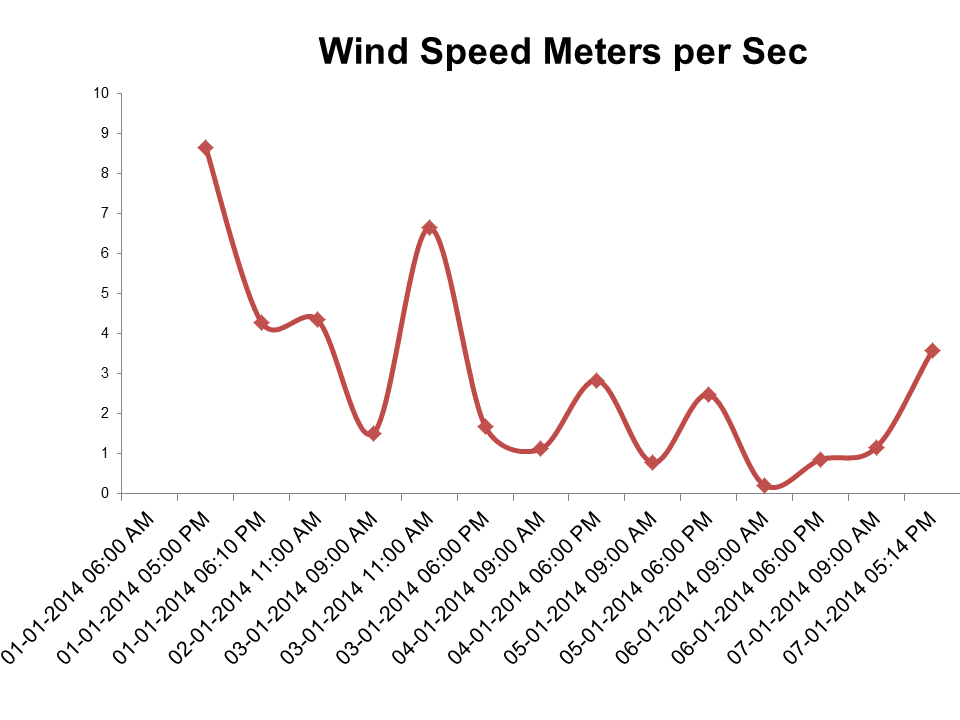
Now we have 7 days of data.   the data shows the wind speed is declining day by day. Speeds are high during day time and less during night.  The X axis indicates speeds in Meters / Second.  anything above 3 meters per second is considered reasonable. This is at a height of 19 feet. I must admit that the land is 10 feet lower than road level.

Suppose if I install a wind pump? Will I be able to store water and irrigate during lean periods.  Let me wait for few more days to see the trend.  Unfortunately we donot have any help from outside to know the wind velocity in this area, even though there are many professional wind mills available just 30 Kms away.

The wind mills quotes collected so far from different companies indicate that they cost anywhere upwards of 2.5 lacs for 12 meter tower with around 5 meter rotor wing diameter. That is a lot of money. I must be damn sure about the decision if it is to be taken.  The same applies to Solar also.


Sunday, 5 January 2014

Mutton, Chicken, beef and 'farming'

There is chicken and mutton everywhere. Almost all Indian tastebuds are being converted to Non-Veg. Normally Indians used to have a menu of meat only on Sunday when it was considered a premium.  Now population is so desparate that they want it for every meal. Some even proclaim in office parties that they cannot live without it. When you go out for lunch, only 2 out of 10 will order for Veggie curry. Pure Vegetarian hotels are becoming a rarity. Even they sell more chinease varities than idly and dosa. What KFC has introduced just a few years before, now many local companies have started cashing in on this growing market.  Recently i saw TV advertisement of a popular (local ready masala maker) brand which has started packaging chicken pieces.

Thanks to Govt funding, the entire infrastructure development and investment is going more in favour of animal farming. Agriculture universities are training farmers day and night (take a look at any of KVKs training schedule) on 'goat farming' and chicken harvesting. Farm lands are being installed with poultaries. Farmers are being made to believe that the returns are high only on animal farms. Animal feed production is another market that is getting popularised. Even popular magazines on agriculture which support organic farming carry more articles about stories of animal farming.  While it is natural and essential for any natural farm to have a healthy cycle of food and manure through upkeep of few country animals, poultry and birds, here we are talking about large scale farms of the size of giant factories.  The 'animal factories' which produce juicy chickens  grow animals using various chemicals - growth hormones (roxarsone or nitarsone, arsenical antimicrobial drugs that also promote growth) steroids, antibiotics, injections and drugs. It is funny that educated India reliesh them knowing fully well about what harm the residue chemicals can do to them.  This is at a micro level.

On a macro level, think tanks and market survey companies are publishing statistics to potential foreign investers that meat consumption is the lowest in India compared to other countries. Prompting more investment and creating 'market potential' in a country which has highest population (stomaches) after china and highest number of agriculture farmers with small land holding. Govt wants to solve micro nutritional deficiency of population through costly poultry chicken and not through greens, pulses and vegetables which are cheap.

Net Net there is going to be more animal production for consumption and hence necessity for producing animal feed. What happens in America will happen here. Complete deforestation. Country lands will be converted to gracing land. One can see for example such acres of lands around Pune which had been converted to gracing grounds to supply beef to the erstwhile British colony.  Only corn, maize and low quality high volume vegetation will be produced in all farms because they have the potential to sell, consume less water and maintenance. In the garb of easy farming, many have already destroyed their food grain and vegetable farms and have ventured into maize cultivation.  Already India with its weak agriculture policies and a declining Food production (Inflation of food and dependency on imports are evidance of this) will having to compete with a strong industry backed Fodder production and bio-fuel (another evil).

More the animals, more feed and water will be required. Growing meat is not efficient. More Methane will be produced (much larger than the threat of carbon di-oxide) punching bigger hole in Ozone. Even Al-Gore who comes from a country having highest per capita meat consumption (Americans alone consume 28 billion pounds of beef each year) could not touch this topic as it has grown to epic proportions.  It takes 12 pounds of grain to produce 1 pound of hamburger. 11 times fossil fuel is required to produce on calorie of meat. 2,400 gallons of water is required to produce 1 pound of meat, where it takes only 25 gallons to produce 1 pound of wheat.

To satiate hunger of Americans, already many of the forests in third world countries (example malasiya) have been de-forested to grow Sugarcane, corn, oil palm and the like. As Mahatma Gandhi Said in 1926, "To make India like England and America is to find some other races and places of the earth for exploitation. So far it appears that the Western nations have divided all the known races outside Europe for exploitation and that there are no new worlds to discover. What can be the fate of India trying to ape the West?...."   We now see that more of Indians have started exploiting Africa. Millions of acres of farm lands are being acquired from that poor country to be exploited growing fodder, biofuel and food to be exported at high cost to other countries.

RMF will not grow fodder and bio-fuel on commercial scale. RMF will grow them only for immediate, internal and local consumption for neighbourhood, that is if necessary.


Friday, 3 January 2014

The First Anemometer readings - wind speed measurement on Farm.

Now the Anemometer is working fine. Subbu discovered a small switch that had disengaged the meter. Now it is working fine after it was pushed back. Subbu and team  made an easy ladder path to climb up the tripod pole made out of Casurina poles connected with wooden steps and plank, at a height of 19 feet and says he enjoys staying over there.  Cool. 

The below are the anemometer readings that have been received from him.  The anemometer has counter measuring in xxxxx.yy where x is in kilometer and y in meters. He said he was waiting or y counter to come to zero before noting down. Then I corrected him and asked him to give two digit decimals also as it is without waiting unnecessarily.  Otherise they will become nervous. First three columns are inputs. Balance are calculated by me over excel sheet. 

 The first Anemometer readings.
Date
Time
meter Reading
Time interval in Hours
Incremental Distance Kms
Speed (KM)/ Hour
Speed Meters per Sec

01-01-2014
06:00
0
0.0
0.00


01-01-2014
17:00
343
11.0
343.00
31
9
day
01-01-2014
18:10
361
1.2
18.00
15
4
day
02-01-2014
11:00
625
16.8
264.00
16
4
night
03-01-2014
09:00
745.6
22.0
120.60
5
2
day/night
03-01-2014
11:00
793.5
2.0
47.90
24
7
day

I am not sure if I have done the calculations correctly. But common sense is saying it is reasonable. As per this measurement I am getting a wind speed comfortably above average.  3 Meters/sec is considered slow and 4 Meters/Sec is considered medium speed.  Surprisingly the internet is not having any information regarding the actual field measurements made in our part of country (or for that matter anywhere else) inspite of the fact that there is so much of hue and cry about wind energy and crores are being invested in.

The good news is that these speeds are at 19 feet height / 6 meters.  The actual windpump rotor if purchased will be at 15 meters height.

Another finding is that speeds at day time is high and night speeds are bit low. I cannot conclude anything now, but need to watch for atleast next 30 days before taking a big decision - wheather to buy a windmill or not..

****


Sastha and the Sun God

There is a Sastha Temple near my Farm. A small one. That is a big landmark for me from the time I was doing site survey 3 years back. It is even visible in Google earth map. This small temple had a tinned roof supported by Palmyra wood (Borassus flabellifer) which was the only shade in the few kilometers radius. I
used to discuss and dream about my future plot from under this roof.Very hot in summer. The temple was constructed at an elevation on level with the village bund road, reclaiming a portion of a pond. The pond would be filled with rain water to the brim during rainy season and would dry up soon. My plot is just in front of the temple - the other side of the bund road at a lower level.

I have great devotion to this Sastha, for my "kula Deivam" (family deity) is also a sastha. But he is in nearby village called Chirumalinji officially called Rajakkalmangalam Peruvembudiyar.  From the beginning i had been dreaming of developing this temple also along with my farm in whatever way possible. Since the temple is a resting place for all passers by, it must be open, green and simple in its future outlook - more of bamboo, wood and less of cement.

One day in around July, 2012 during heavy wind knocked the roof of this temple which stood almost 80 years. I was told by the Dharma Kartha, now above 70, that he was born under this roof.  The roof gone, temple was exposed to hard sunshine. I was told the roof also knocked down the Ayyanaar statue which was beside. This photo I took before that.  That was a shock, but a truth which everyone had to accept. Perhaps destiny had it that way. Perhaps the Sun God wants to unite with Sastha.  I was expecting quick action from the committe who takes care of this temple to put a roof. To my surprise, nothing happened. They did not even visit for days togather. One full year went by and annual puja was also celebrated. But they put a temperory roof and promptly remove after the function. Still the Sastha is without a roof. I later learnt that such actions are generally taken slowly.

I attempted to mobilise resource and offered to put a temperory shelter followed by a permanent one taking alms and donations. But during the course of my making contact with the committee, i found that they were not encouraging any outsider intervention, fearing the power of deity would be lost. In such matters where celestial power is involved, it is better to wait and watch what elders are saying than take own initiative. The urge to define something natural as a problem and solve is something corporate trained guys keep doing it. But this is highly discouraged in villages. Incidents are taken at face value without any judgement - good or bad.  Moreover they mentioned that they must get "permission" from the God himself (through a special ritual) to find what he has ordained them to do and then do the needful.  Till then, it is left to nature to take care of itself.

In any case Sastha looks more beautiful now in open space. Perhaps I need to plant few nice flowering trees around till the committee would decide to build a pukka shelter. I was told by Dharma Kartha that he indeed took permission from VAO for such a construction, but did not get any further help from his clan. He is too old and far away from temple to reach here and do the needful.

Hopefully there is something cooking in the minds of devotees on how to go about for a pukka roofing. For myself I have decided to  donate a Stone Lamp Pillar (Kalvilakku). Beautiful oneas are being made in Kerala.

***

Wednesday, 1 January 2014

Farm Status and Micro Planning for a week ahead

Around 300 saplings of Casuarina (Savukku) is still in polythene bags.  Subbu said it has already grown upto a feet and the roots are piercing out of the bag.  No more can they be contained and they need to be rooted at once. Earlier this decision was stalled owing to the fact that watering the saplings after it is installed on the ground would be difficult manually for Kannan using hand pump. Now that the routine in the farm is settled, Kannan gained more confidence he can handle this.. But alas!

The ground is as strong as a rock. spade/hoe is not going in. Subbu is to call a JCB tomorrow (Rs. 650/- per hour and Rs. 300 bata for driver) and cut a narrow furrow next to the fence to put the saplings on the ground. I think a couple of hours of work is enough. I asked him to make further furrows on east fence also so that we buy more of the saplings and plant them. One more helping hand for pumping water and we will be comfortable.

Last month we found a good nursery to purchase plants. The village is called Parassala in Kerala near Kaliyakavilai.  That is close to my native at about 2 hours driving. I sent Subbu and party over there for a picnic to find whats up. They said it will take a full day to see the entire nursery. So many plants. Rates are not cheap, but quality and volume is assured. I will buy remaining set of plants that I missed last time. Some of them are very obvious and I wonder why I missed them. By the way am I going to make a botanical garden or a farm ?

Common NameTamil Name
TeakTeak
CoconutThennai
HibiscusSembaruthi
Spanish cherry Magizham
coral JasminePavazhamalli / Parijatam
Kattu Karuvepillai
BaelVilvam
PongamiaPungai
MahuaIllupai
Rain TreeToonguMoonji
Rose woodThodhagathi 
ArjunaNeer Marudhu
Portia Tree Poovarasu 
RudhrakshRudhraksham
pambu kala chediSarpagandha / Nava Konji
Singapore CherryThen Chittu
GalangalChittarattai 
Indian cork treeMara Malli
KaimNeer Kadambai
Hill MangoKiluvai
AnjanAachi, Malai Athi
Wild LimeKattu Kichili

With such a hard surface (which had been tilled 6 months back), I wonder how I will make the soil pliable and soft.  I guess the answer lies in putting more cow dung and adding organic humus.  They must act on the soil and increase moisture content.  Bringing foreign soil and mixing is costly. I donot want to do that.  Presently cow dung is available from nearby farm (a truck load 1200/-).  Hmm.. I must buy a bullock cart - long pending one. I had advertised in forums with no reply for past 7 months. I think I must buy a trailer with 4 tyres that can be pulled by one or two bullocks. I donot like two wheeled ones as they will stress the animal if too much load or too little is present. Perhaps two trailers are required to be purchased.  One can be used permanently for fetching cow dung from nearby cow sheds and another for other uses. Last time how did they load and unload cowdung. They used hands and hoe. I wouldn't appreciate that. I must buy gum boots, hoe and plastic trays for compartmentalizing cow dung loading and handling.  Need to study this logistics aspect to make this work more interesting.

Kannan has not yet prepared the Gana Jeevamruthuam that I prescribed to Subbu last week.  Atleast the raw cow dung is being applied.  At this stage concepts like Zero budget farming, Natural farming, Permaculture etc are far far away. I need to dilute them and create stories and deliver somehow. If only I had some volunteers who can visit the farm and impart these knowledge I will be grateful. I can pay some honorarium. Otherwise I will have to act fast and courier diagrams and CDs and keep following over phone.

But the grass growth is seen dense after tilling the land last time.  The grass should act as mulch and protect the soil hopefully until it is opened for use later for cultivation. I feel once the border plants grow with watering by Kannan, they must create a micro climate and preserve the moisture for long time in soil. When I was touring in North west India recently I saw that many of the fields got their water only from the frost or dew. The plants were as healthy as if they had been watered. I am talking about desert climate.

******

Monday, 30 December 2013

How to communicate to my workers from 1500 Kms ?

Communication has always been a challenge. There is wide choice of communication medium today (Cellphones, internet etc). But one would agree that today communication gap is the highest inspite of them even among close family members. That being said, how do I communicate effectively to my team members and drive the work in the way I want it to be ?

Last week Subbu called me to say that the newly installed anemometer on three poles and a wooden plank as platform is not working fully. While the fan is rotating fast due to wind prevalent over there, the meter is not counting. He allowed one more day to confirm this. If I were on the spot, I would have opened the meter box and fixed the tooth wheels which I suspect apparently is not making contact somewhere. I have all the tools with me. But how to I communicate from Pune over the phone to someone who is not even having a screw driver. I told him to separate the meter box and give it a watch maker in nearby town. In parallel I called the manufacturer company to get assurance for a replacement in case it is not fixed. He said, for every 32 revolutions, one point should advance, which it is not doing..

Today he called to say one or two plants are sick and affected by a bug. It was lemon plant. He himself was sick with cold and mentioned he had an injection. Of late I have noticed him taking too many medicines and not feeling healthy at all. I had advised him to first discontinue injections and tablets and instead go for "Nattu Marundu" - Ayurvedic treatment which is very effective and long lasting, atleast for common cold. Things like Ginger tea, Garlic supplments, regular intake of Tripaladi choornam, eating good and healthy food etc. I had to show him direction for an Ayurvedic shop which he passes by regulary but has never noticed it in the village. They visit the doctor (Medicine is free in Govt hospitals, which is well maintained) for everything.

Secondly for the lemon plant I suggested a decoction of Tobacco, Green chillies and Garlic to be crushed into paste and the juice to be mixed with water and sprayed. Anything which I say is a news for them. (Actually they must teach me village remedies and not the other way round). Their ignorance means they have been far removed from reality due to the current social setup and generation gap. They eat more medicines than urban guys. They give 'tonic' to children instead of healthy food. Inspite of breathing pure air, they get more chicken gunia, malaria and dengue. They spray more chemicals on the farm, take more debt, borrow chit fund, waste water and electricity, donot grow sufficient varieties of food for themselves, suffer all along. Why ?

Coming back to farm work, on the one hand it is advantage for me that they will do exactly what I prescribe them to do on the farm. But it is also a disadvantage that they will just do what I say with no value addition from their side, even if something goes wrong.

Therefore for a sustainable development, I need to coax them and make them use their own brain and ideas. For this I must be prepared to bear with mistakes that they may be doing in due course of their learning. This is the approach i have taken so far and have been liberal on that. It works. Now I may have to add my multimedia skills to impart higher knowledge which I myself have  collected from near and far.

That means try with video recording the speech with illustrations of what to do and how and send across the VCD and make it play over there. I may have to sponsor a Video Player.  My worker Kannan cannot even hold a phone and speak legibly. Therefore this is required.  The required software and setup is available with me now. I am using Cyberlink powerdirector for video editing. All my own stock photos are used. I intend to use some copy right material with due acknowledgement also for internal use.

Perhaps if this is done properly chapter by chapter, it will be helpful as an induction for new joinees in the farm as the farm grows.......


Yellow Flowers and Mustard Oil

Recently I had been to Rajasthan and want to share what I saw there which took me by surprise. Acres and acres of land without any gap was having cultivation of Mustard
(Rapeseed) Plants in flowering stage (Yellow Flowers). It was wonderful to see the collective sight of yellow flowers upto the horizon. At the same time, was suspecting why the farmers are here so fond of only Mustard and have chosen a mono-crop, this season. Are they growing this for bio-diesel? With doubt in mind I did a quick Googling and got convinced that it is usual for Rajasthan and adj. states to grow Mustard during Rabi (Winter) season. This is purely for domestic consumption.

The yellow/white mustard is indigenous to Southern Europe, whereas brown mustard is from China introduced to Northern India. Mustard prefers loamy or clayey loam soil. The major processed products are mustard powder used in the manufacture of mayonnaise, dried or dehydrated mustard leaves, whole mustard seeds etc. Whole mustard is used as a flavouring agent in Indian cooking, whereas ground mustard provides flavour and consistency in Bengali fish curries.
Mustard flour has preservative and antioxidant properties in addition to providing flavour and colour.
 
It was also heartening to know that the entire oil extraction happens through unorganized small oil mills using Ghanis and not using any big machinery. Entirely extracted by pressing (cold process). To think of how the entire cultivation of mustard will be pressed like this is mind  boggling. But it happens in this incredible India.  First grade oil, so good for the health !. Which south Indians are missing by not using Mustard Oil and depending on factory made refined oils of various kinds.


Friday, 20 December 2013

Prosopis Juliflora the devil to farming

Prosopis juliflora is an invasive species.  Also called as Cheemai Karuvel (சீà®®ைக்கருவேலை) or Veli Kathan in Tamil, Mullu tumma in Telugu, Bellari Jaali in Kannada and Angaraji Babul in  North India.  Acres and acres of non-farming lands are occupied in India by this one species. Sometimes i have seen this in my entire train journey through the window. Growing upto 12 feet, it reproduces through Pods, hundreds of seeds per tree.  The roots go deeper (Record 53 meters or 175 feet) and drain underground water. The thorny bushes block shrinklands and block passages.

Courtesy : CopalIndia
From a distance, the land would look fertile dotted with light green trees of these variety. Closer look will give only disappointment. All over the world these trees are in  aboundance.  Some people say this was spread from airplane during burma war. But there is no story to prove this conspiracy.

Back home especially near my native place and in my farm also this is all pervasive. (Hence this article). This is the one and only species found in many places.  Every farmer has to clear this if he needs to reclaim the land. I myself have spent over 40,000/- to remove these using JCB. I donot know how many crores have been wasted on this species by all farmers.

The best form of this invasive species management is prevention. Kenya has declared this as invasive species. Entire Africa is suffering.  Small plants have to be weeded out by hand. I donot think this is worthy of consideration even for fire wood. The handling is difficult due to thorns and each plant consumes space and water. My neighbour farmer would not allow me to cut these from my border areas still. He is a laid back farmer who have been enjoying firewood from these whenever he wanted from even across other other's land. I thinks some birds like to build nests because of the protection it gives. But it is rare. May be for this one or two can be spared here and there. These plants were found by me in TN, Andhra, Maharashtra, Gujarat - everywhere.


Wednesday, 18 December 2013

Farming is not about just growing food. It is much more..

One of the mission of RadhaMuraliFarms (RMF) would be working for social cause from day 1. Job opportunities for the neighbourhood.  The RMF neighbourhood consists of small villages like Nachankulam, Nochikulam, Shenbagaramanallur, Emankulam, Pothayadi, Sevagankulam, Puthaneri etc.  All are dry lands with bit of agriculture depending on seasonal rain and tank water.  The author realises that the RMF farm cannot exist in isolation. It must be breathing in and out with the lives of neighbourhood. Accordingly it becomes a responsibility to see that the people around are healthy, engaged with activities which may add value to themselves or to the farm indirectly.

After seeing the Tiny Oil Mills of Desai, i was motivated to think, why not propose and develop small scale industry ?  What am i going to do with the farm produce ? Sell it to brokers at pittance, or convert them into valuable, nutritious food and sell it directly to consumer ?  It makes sense in all respect to put tiny oil mills. No. 1 it will give clean food. No 2 it will give employement to one or two women.  Provided power is arranged, the tiny oil mills can be used to squeeze any oil seed, groundnut, seasame for example.

On my visit I say Tinytech was involved in preparing a Gujarati Dish through a simple process. Tal Sankli (Sesame Seeds with Jaggery).  The entire process was done without fire.  Sesame seeds and Jaggery were crushed in the Tiny Mill. The oil that would come out also was left to itself. The resultant sweet dish was packed immediatly and sold also. Rs. 50 per dabba. Desai mentioned they are selling around 250 packs per day only to people who pass by the road. No advertisement. It is earning Rs. 5000/- per day for the crew.  Just to prove the point.  Shelf life is 1 week. I asked "Have you not done any R&D to improve the shelf life".  Desai smiled. He did not answer.  Generally anyone from rural areas will not answer such questions. Because eating preserved food is eating fossil food. They donot appreciate that.

Well, once a machine starts working, it needs seasonal farm inputs as raw material, labour, power and marketing to sell the produce.  Let me assume the following and check if it would work;

a)  Farm Input : Available in plenty.  Tirunelveli district is known for groundnut cultivation.  RMF itself can cultivate groundnut and seasame during seasons.

b) Labour : Available in village, provided the income is assured.  Preference to be given to Women who need support.

c) Power: The machine can be kept in the farm. But I am still exploring the Renewable energy sources. Till then the machine can be kept in anyone's house in the neighbourhood.

d) Marketing and Sale:  I guess this can be taken as a pilot to check how Organic produce with purity of food will be purchased by people. Perhaps door to door marketing with known circles and word of mouth should sell the produce.  For example a liter of gingly oil in the market today costs around Rs. 250 to 300. The oil is also purified (refined) through agents by solvent extraction, neutralization and bleaching in order to improve its cosmetic aspects. 

On the contrary the farm product will have advantages of No refinement (hold on to antioxidants and polyunsaturated fats), cold press (hence vitamins are preserved), fresh, organic, (process is) visible and (sale price is) transparant etc..

e) Capital : Money required to purchase machine, utensils, accessories. This may come from someone like you who can sponsor for a share of profit or charity.  Loan - strictly No No. At a later stage, the beneficiary herself should be able to expand in cooperative manner.

Here goes the POC (Proof of concept)

Step 1 : Seasame and Jaggery are being ground in the mill


Step 2 : Product is packed immediatly.
 

Step 3 : And Sold to the consumer directly through window.

No fuss isn't it. ?  Let me re-visit this at a later date. Till then writing this so that people who read this can incubate the idea.  This is exatly what Mahatma Gandhi proclaimed in his 1942 vision about Village Swaraj. Of moving away from Industry (Centralised mass production and dumping on consumer), reducing carbon foot print (on moving goods from one corner of country to another) and being self sufficient (living with minimality).

End of Story

Tuesday, 17 December 2013

Steam Engine for Farm


Is there anyone who would not love a Steam Engine ? The smell of coal burning, the clicks of iron joints or hiss of the steam or the loud horn in bass. Our generation is privileged to have seen all of these.  Some of the specimens are still found in front of railway stations on display. I donot know where is Vaigai express kept, but Dakhkhanchee Raanee express is still being pulled once an year in Mumbai using another engine.

This year to mark 150 years of Railways, between Jan to Feb 2014 the only running locomotive steam engine will travel around 1, 400 km from India's only surviving steam locomotive shed in Rewari, Haryana to Mumbai.
The R&D workshop for steam engines of Desai

Coming to the farm, can one use Steam power to do farming work?  I think it is well within reach. After seeing TinyTechIndia's steam engines ranging from 2 HP to 50 HP, I am convinced more on this.  It is not the technology now which is prohibitive, but the  implementation. The continuous supply of biomass to burn, the sincerity with which workers will light the fire and run the show, the integration of boiler, steam engine, transmission of power to generator, the loss thereoff, scheduling of work - all these matter.

TinyTech V K Desi writes to his friends thus, "Recently my first tiny thermal power plant of 10 kw was successfully commissioned in village Dalbhanga of Kuchai Block in the district of Saraikela-Kharsawan in Jharkhand state of India. They never saw electric light in their life. During the day, power plant is connected to run tiny oil mill to provide fresh natural cooking oil to villagers and during night, it is connected to generator to provide lights in 200 homes. Two young boys have grasped knowledge to operate the power house and oil mill only in 3 days and now they are running the plant independently. After 11 pm, they close down the plant."
Desai has designed very nicely using a single valve and minimal moving parts. One of his design for example Single cylinder double acting steam engine 5 hp, cylinder dia 3"xstroke 4", complete with reverse mechanism,  hand lubricating pump for cylinder lubrication, drip lubricator for crosshead lubrication and 12" pulley. Weight 85 kg.

He claims he has tested pipes at 600 psi, whereas recommendation is only to test at 300 psi. Many of his engines are in use locally and have been exported already to small countries (Developing nations). It must be a real boon for rural areas which require captive power generation.


50 HP Engine Boring - made of gun metal
 
I could see all kinds of engines in his workshop (Mandir to be precise). These are made to order.  Sincere young workers were seen machining different parts of the engines in lathe machines. There was one engine ready to be exported to Poland. Painted in blue color shining in morning SUN ready for packing. Desai was seen taking photos of the engine himself from different angles sqatting on the floor at this age. He was so enthusiastic with mystic smile.
Newly Painted engine waiting to be dispatched to Poland

Each of these engines have a large free wheel. I guess this is to smoothen the power variations that may araise due to crank rotation. An eccentric wheel closes and opes the steam input / valve.  Totally the engines may weigh between 60 KG to half a ton.

 
Bioler and Chimney where biomass can be burned.
Inside are the pipes to generate steam

Next comes the question of how to generate steam which forms the input for the steam engine. Large number of pipes welded in parallel is used. They line up the ceiling of the boiler in which any biomass can be burned. Refer picture.

When the wood, charcoal or any combustible material burns, the resultant heat boils the water in the pipes. Steam is generated. This is transmitted to the engine which provides necessary force to move the piston up and down.

Parallel Pipes hold water which becomes steam when heated.
View is from inside the Oven / Boiler / hearth

Having said that, now we can put all pieces togather.

a)  A heat Source / Fire place for generating heat over 100 deg Centrigrade (212 deg F).
b) Water container / typically pressurised pipes holding water.  Due to vaporization energy turns water into the gaseous form and increases in volume by 1,600 times.
c) Pipes to transmit steam into steam engine, valves to measure pressure etc.
d) Steam engine to convert steam power to mechanical power
e) Generator to convert mechanical power to electrical power
f) Some regulators.

From the context of Farm, i have the following ideas;

a) Heat Source :  If farm inputs have to be minimal, we cannot keep purchasing firewood or charcoal. They are costly. Will be affected due to demand/supply gap. Cost will go high due to transportation also. But they are ideal solid burning material.  In a typical farm, I guess we can mix cowdung + Saw Dust + Husk + Straw pieces and create fuel pellets. Sun dry and store it.  I want to try this eventually.

Alternatly, there is also a special source that I want to consider, namely SUN light.  As shown in the picture, perhaps a semi cylinderical reflective surface can be created (in a parabolic shape) which can be turned over its axis manually or otherwise. Steam pipes can be positioned on the axial line. There can be many such arrays. All the pipes can be combined into one and send to steam engine. I am willing to try this alone or if a suitable partner comes who doesnot count pennys and has a scientific sprit.

b) Steam Generation :  Desai mentioned that of all the components, the Steam generating pipe assembly is the costliest.  For example if Engine is costing 1.5 lacs,  the pipe assembly would cost 3.5 lacs or more. Therefore if you are cost concious, he urged me to fabricate the same locally. He said he will help with integration and testing.  That makes sense. I need to find some source in Coimbatore to fabricate steam rollers.  The pipes have to withstand pressures of 600 psi.  The welding must not corrode over a period of time if water is salty also.

c). Stem Engine:  Desai is there.  I guess a 5 KVA machine would suffice for 10 acre farm.

d) Generator : Also called alternator.  Need to find one. I am not sure where I can get, but there must be plenty of manufacturers for dieseal generators.

f) Regulator: This holds good for even the current dieseal generators. Therefore must be available in in the market.

End of story.

Managing Farm Inputs

Managing the Farm from remote (1800 Kms away) is always a challange and fun.  Having planted few hundred saplings, I now need to think about bringing some biomass to the soil.

My soil is not so good. It is a worn-out sandy clay soil. Silted over a period of time due to non cultivation, running surface water and non-cultivation the soil is appearing coarse.  Already, whereever there is a sapling to be planted, I had asked my team to put red soil which was imported from else where in small quantity. Soil +
Pseudomonos Bacteria 
I liked this color so I have put the picture here.

coconut coir waste + cowdung was mixed and filled into the pit. Kannan, my worker is already a farmer and knows about it.  I added further value by sending my team to nearby KVK (80 Kms away) to purchase Psudamonos viridi and i think rhizobium.  Initially the team said they have nothing in stock. But such things are not in front desk and you need to ask specifically. Upon questioning one coordinator came in line and explained what he has. I asked him to impress upon my team how to use it.  Then onwards the saplings were treated before re-planting and they now have a hang of it.

Now coming to fertilizer.  I had dreamt of creating some vermi compost units with mechanisation before anything else - some mixer, grinder, chopper, conveyor belt, composting areas, storage area, filtering machines etc.  But you see dreaming is different from putting to action.  We can dream endlessly, but everything costs money and fancy processes to be developed. It cannot be done just lik that.

The cheapest thing for me to do now is to import cow dung. Which I have done in the past one week. 1 tracktor load of cowdung costs Rs. 1200/-.  I understand loads are going to kerala from here at 1500/- per load. I need to be now careful to grab my share from the cow shed owners. Should think of how to reduce the cost.. Easiest thing is to keep my own cows... but is some time away..

So cow dung is here.  Next is adding value.  Panjakavya. Subbu had brought a blue drum for it and was asking how to make panjakavya without Cow Urine. !.. Because cow dung is easy to get and not cow urine.  The cow Urine will just go waste running on the mud floor of the cow sheds. Because there is no means to collect it. The floors are not concrete.  I had given him an idea
(You see that is the problem with IT guys. We have solutions for everything irrespective of wheather you like it or not).   Take a PVC pipe of 6 inches diameter and one feet length or more. Plug that deep inside the soil after digging a proper verticle hole such that entire pipe is submerged. This has to be down where there is natural tendancy of water to get collected in low level.  See the picture to right.  On the top put one lid having small holes.  Now when cow will urinate, the urine will drain normally and get into this PVC pipe and get collected. Later we can pump this out using simple kerosene pump into another container. Simple isnt it. ? But our guys will not do it. I have reserved its implementation for another day.

Meanwhile without using cow Urine or using very little we can prepare Gana Jeevamrutham (Solid Fertiliser). Mix cowdung 10kg with 2 KG of spoiled jaggery and 1 KG of beasan powder, Cow Urine and some water. Allow it to cool for 3 days and apply on the roots. - This is the prescription i have given now. Hope it works.....

The other development is that the anemometer has reached by courier to the farm. Now it has to be mounted on a pole. My guys were asking if they can purchase 3 Sticks instead of one. The idea is to construct a kind of ladder so that they can climb up and take readings. I said ok go ahead.  I suggested buying a bamboo ladder and two poles. But due to cost (Even Rs. 1000/- is not to be wasted. They are sensitive about cost and i must respect that.) it was given up. Hope anemometer will be up and running in a couple of days....I am not sure how they will mount on top of 3 poles using a wooden plank. I must wait for the ingenuity and enterpreneruship of rural folks and carpenter over there to show up...